7am: Great night at the Charles V hotel dormitory, we feel well rested. Camille stays in bed while Max and I go into town to book a tour of the famous Potosi silver mine.

7:30am: we have breakfast at the local market, in a little stall ran by a nice old lady. Tea, jam sandwich and ham sandwich for 7 bolivianos per person (1 USD).
8:00am: We locate the mining tour that we want "Big Deal Tour". It's the only tour company ran by ex-miners. They are very well rated, and they give part of the earnings back to the miners and their family. Going in, we meet two Norwegian girls, Silje and Ruth. Silje wants to visit the mine and asks to join us. After signing up for the tour, we have 45min to get ready. We head back to the hotel to sync up with Camille.
8:45am: we are back at Big Deal Tour with Camille. She'll chill downtown while we visit the mine. Max and I climb aboard an old mini-bus with 15 other people and are on our way.
The guide "Efra" (Efraim) sounds really cool, he talks a lot, giving information, cracking jokes, mixing Spanish and English to satisfy the two audiences... He's obviously very experienced as a tour guide.
9:15am: first stop of the tour: the "Miners' Market". We are told that this is where the miners buy their supplies for the day: bags of coca leaves (a good miner chews 1 bag of coca leaves per day!), soda, dynamite sticks etc...
We are told to buy some of that stuff to give to the miners as gifts to thank them for visiting the mine. Max and I bought 1 bag of coca leaves, 1 bottle of orange soda and 1 stick of dynamite.
9:30am: second stop: dressing room! We are provided with boots, pants, vest, helmet and headlamp to visit the mine. We quickly change and get back in the bus.


9:45am: third stop: refining plant. This is where the ore extracted from the mine is crushed in fine powder and where the silver is chemically separated from the rest. Thanks to these chemicals, the silver powder floats to the top and can be scooped out.


10:30am: we are now at one of the mine entries called "Candelaria", which is one of the oldest mine shaft in the mountain. There are 180 active mines in this mountain... It's basically like a swiss cheese! There is no lights in the mine shaft, it looks quite daunting. We follow Efra in the narrow mineshaft...
Some parts are big enough to stand, others are so narrow that you have to crouch. I bump my head on the rock every other step... I'm glad they gave us helmets! The deeper we go, the more dust there is in the air, and the more I start to hyperventilate. Efra asks several times if everyone is OK, and re-iterates that his assistant is there to walk anyone out if necessary.
The dust is clogging my lungs and I have a hard time breathing. This, combined with a stretch of fast pace crouching makes my breathing really hard. All I can do is focus on my breathing. I can see other people from the tour looking at me funny. We walk further into the mine. It took about 20min to get full control over my breathing again, and I start feeling better. We have walked about 1km inside the mountain according to Efra. We have seen several wagons full of ore pass by so far. Some sections of the shaft are slightly downhill, so the 1 ton wagons full of ore zip by quickly and they can't stop! See picture with the two miners hanging from the wagon.
We meet several miners along the way, working with picks and shovels to extract the ore and load it in wagons. I can barely breathe, I'm amazed that they can even work in these conditions.
At the end of the tunnel, we meet another miner who's using a hammer and a chisel to make a dynamite hole in pure rock. Efra tells us that he's going to spend several hours making that hole. I gave it a try (see picture). After hammering a dozen times, I can barely see any dust coming out of the hole... I guess I'm not made to be a miner. The temperature is really high... It must be 35 degrees in here.
We give away our small gifts to the miners as we go. Efra always suggests what to give and when.
We finally head back, and I'm quite happy at the thought of breathing some fresh air!
On the way back, we stop in a recess featuring a statue of a devil "El Tio". Efra explains that El Tio owns all the silver in the mountain, and miners have to make offerings in return for protection and good quality ore. Offerings are: cigarettes, coca leaves and 96% alcohol. Efra also explained that offerings are always made to both El Tio (the devil) and Pachamama (mother earth), to respect the duality.


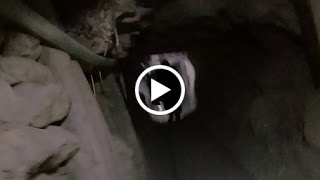
12pm: we exit the mine, I can finally breathe! :) It's now raining, and the sky is yellow.
1pm: we have removed our miner's gear, and the mini-bus has dropped us off at the Big Deal Tour agency in the city. Camille was waiting inside the agency and is happy that we came back in one piece!
1:30pm: we go to a cheap lunch place for a bowl of soup and a plate of potatoes and chicken, for a change :)

3:30pm: We head to the "casa de monada" which is the famous Mint-turned-museum that everyone raves about. We book a tour in English (mostly for me, as I don't speak a word of Spanish). The tour starts at 4:30pm, which leaves us a bit of time for a hot drink at the Mint cafe. We meet 3 friendly French people (2 girls 1 guy) who are in a big trip in South America.
4:40pm: the tour starts. Our guide looks like a Spanish David Copperfield. He has a magician-like demeanor, moving his hands like he's going to conjure a rabbit out of his sleeve... Very funny to watch! He does a pretty good job explaining things though, and we all enjoy the visit.
We go through various factory rooms showing the coin minting process across the centuries. The most impressive machines are the original 16th century oak machines that were used to thin out the silver ingots. These machines were built in Europe, shipped to South america, then transported by mules to Potosi and they are still visible there. David Copperfield explained that the oak is exceptionally well preserved due to the dry and cold weather of Potosi. All similar machines in Europe have rotten a long time ago.


~6:30pm: The visit is finished, we are quite hungry and we look for a restaurant.
7pm: We found a nice looking restaurant downtown that is recommended in our Lonely Planet. The owner is very friendly and we feel at home. We order some beers and some food.
A tall guy walks in. Max and I immediately recognise him as a fellow tourist from the mine tour. We invite him to join us at our table. He's a 26yo French guy, going around the world in 280 days (see http://www.republicain-lorrain.fr/edition-de-sarrebourg-chateau-salins/2016/08/13/le-tour-du-monde-en-280-jours-du-sarrebourgeois-antoine-feret). Nice guy!


8:30pm: we go back to the hotel to pick up our bags and head to the bus terminal. Tonight, we are planning to catch an overnight bus to La Paz.
9:30pm: we have picked a bus company called "Bolivar" which is supposed to be one of the best bus company in Bolivia. We find our seats and get comfortable.

10pm: departure... 8 or 9h to La Paz!

The infamous Potosi silver mine
7:30am: we have breakfast at the local market, in a little stall ran by a nice old lady. Tea, jam sandwich and ham sandwich for 7 bolivianos per person (1 USD).
8:00am: We locate the mining tour that we want "Big Deal Tour". It's the only tour company ran by ex-miners. They are very well rated, and they give part of the earnings back to the miners and their family. Going in, we meet two Norwegian girls, Silje and Ruth. Silje wants to visit the mine and asks to join us. After signing up for the tour, we have 45min to get ready. We head back to the hotel to sync up with Camille.
8:45am: we are back at Big Deal Tour with Camille. She'll chill downtown while we visit the mine. Max and I climb aboard an old mini-bus with 15 other people and are on our way.
The guide "Efra" (Efraim) sounds really cool, he talks a lot, giving information, cracking jokes, mixing Spanish and English to satisfy the two audiences... He's obviously very experienced as a tour guide.
9:15am: first stop of the tour: the "Miners' Market". We are told that this is where the miners buy their supplies for the day: bags of coca leaves (a good miner chews 1 bag of coca leaves per day!), soda, dynamite sticks etc...
We are told to buy some of that stuff to give to the miners as gifts to thank them for visiting the mine. Max and I bought 1 bag of coca leaves, 1 bottle of orange soda and 1 stick of dynamite.
9:30am: second stop: dressing room! We are provided with boots, pants, vest, helmet and headlamp to visit the mine. We quickly change and get back in the bus.


9:45am: third stop: refining plant. This is where the ore extracted from the mine is crushed in fine powder and where the silver is chemically separated from the rest. Thanks to these chemicals, the silver powder floats to the top and can be scooped out.


10:30am: we are now at one of the mine entries called "Candelaria", which is one of the oldest mine shaft in the mountain. There are 180 active mines in this mountain... It's basically like a swiss cheese! There is no lights in the mine shaft, it looks quite daunting. We follow Efra in the narrow mineshaft...
Some parts are big enough to stand, others are so narrow that you have to crouch. I bump my head on the rock every other step... I'm glad they gave us helmets! The deeper we go, the more dust there is in the air, and the more I start to hyperventilate. Efra asks several times if everyone is OK, and re-iterates that his assistant is there to walk anyone out if necessary.
The dust is clogging my lungs and I have a hard time breathing. This, combined with a stretch of fast pace crouching makes my breathing really hard. All I can do is focus on my breathing. I can see other people from the tour looking at me funny. We walk further into the mine. It took about 20min to get full control over my breathing again, and I start feeling better. We have walked about 1km inside the mountain according to Efra. We have seen several wagons full of ore pass by so far. Some sections of the shaft are slightly downhill, so the 1 ton wagons full of ore zip by quickly and they can't stop! See picture with the two miners hanging from the wagon.
We meet several miners along the way, working with picks and shovels to extract the ore and load it in wagons. I can barely breathe, I'm amazed that they can even work in these conditions.
At the end of the tunnel, we meet another miner who's using a hammer and a chisel to make a dynamite hole in pure rock. Efra tells us that he's going to spend several hours making that hole. I gave it a try (see picture). After hammering a dozen times, I can barely see any dust coming out of the hole... I guess I'm not made to be a miner. The temperature is really high... It must be 35 degrees in here.
We give away our small gifts to the miners as we go. Efra always suggests what to give and when.
We finally head back, and I'm quite happy at the thought of breathing some fresh air!
On the way back, we stop in a recess featuring a statue of a devil "El Tio". Efra explains that El Tio owns all the silver in the mountain, and miners have to make offerings in return for protection and good quality ore. Offerings are: cigarettes, coca leaves and 96% alcohol. Efra also explained that offerings are always made to both El Tio (the devil) and Pachamama (mother earth), to respect the duality.


12pm: we exit the mine, I can finally breathe! :) It's now raining, and the sky is yellow.
1pm: we have removed our miner's gear, and the mini-bus has dropped us off at the Big Deal Tour agency in the city. Camille was waiting inside the agency and is happy that we came back in one piece!
1:30pm: we go to a cheap lunch place for a bowl of soup and a plate of potatoes and chicken, for a change :)

3:30pm: We head to the "casa de monada" which is the famous Mint-turned-museum that everyone raves about. We book a tour in English (mostly for me, as I don't speak a word of Spanish). The tour starts at 4:30pm, which leaves us a bit of time for a hot drink at the Mint cafe. We meet 3 friendly French people (2 girls 1 guy) who are in a big trip in South America.
4:40pm: the tour starts. Our guide looks like a Spanish David Copperfield. He has a magician-like demeanor, moving his hands like he's going to conjure a rabbit out of his sleeve... Very funny to watch! He does a pretty good job explaining things though, and we all enjoy the visit.
We go through various factory rooms showing the coin minting process across the centuries. The most impressive machines are the original 16th century oak machines that were used to thin out the silver ingots. These machines were built in Europe, shipped to South america, then transported by mules to Potosi and they are still visible there. David Copperfield explained that the oak is exceptionally well preserved due to the dry and cold weather of Potosi. All similar machines in Europe have rotten a long time ago.


~6:30pm: The visit is finished, we are quite hungry and we look for a restaurant.
7pm: We found a nice looking restaurant downtown that is recommended in our Lonely Planet. The owner is very friendly and we feel at home. We order some beers and some food.
A tall guy walks in. Max and I immediately recognise him as a fellow tourist from the mine tour. We invite him to join us at our table. He's a 26yo French guy, going around the world in 280 days (see http://www.republicain-lorrain.fr/edition-de-sarrebourg-chateau-salins/2016/08/13/le-tour-du-monde-en-280-jours-du-sarrebourgeois-antoine-feret). Nice guy!


8:30pm: we go back to the hotel to pick up our bags and head to the bus terminal. Tonight, we are planning to catch an overnight bus to La Paz.
9:30pm: we have picked a bus company called "Bolivar" which is supposed to be one of the best bus company in Bolivia. We find our seats and get comfortable.

10pm: departure... 8 or 9h to La Paz!
Comments
Post a Comment